Sunday, February 19, 2012

4 Things You Didn't Know Had Sequels

#4 Lola by The Kinks

This is arguably the Kinks’ most famous song.  It’s a first person story about a nervous protagonist with no experience with women who, at a “club down in North SoHo” is picked up by the eponymous Lola, who is a transvestite.  Ray Davies, who wrote the song (released in 1970), says that it was based on an actual encounter between the band manager and a transvestite.


The Sequel: Destroyer by The Kinks

Released in 1981, Destroyer picks up where Lola left off, as the protagonist is wracked with paranoia upon bringing Lola back to his place.


#3 The Three Musketeers by Alexandre Dumas


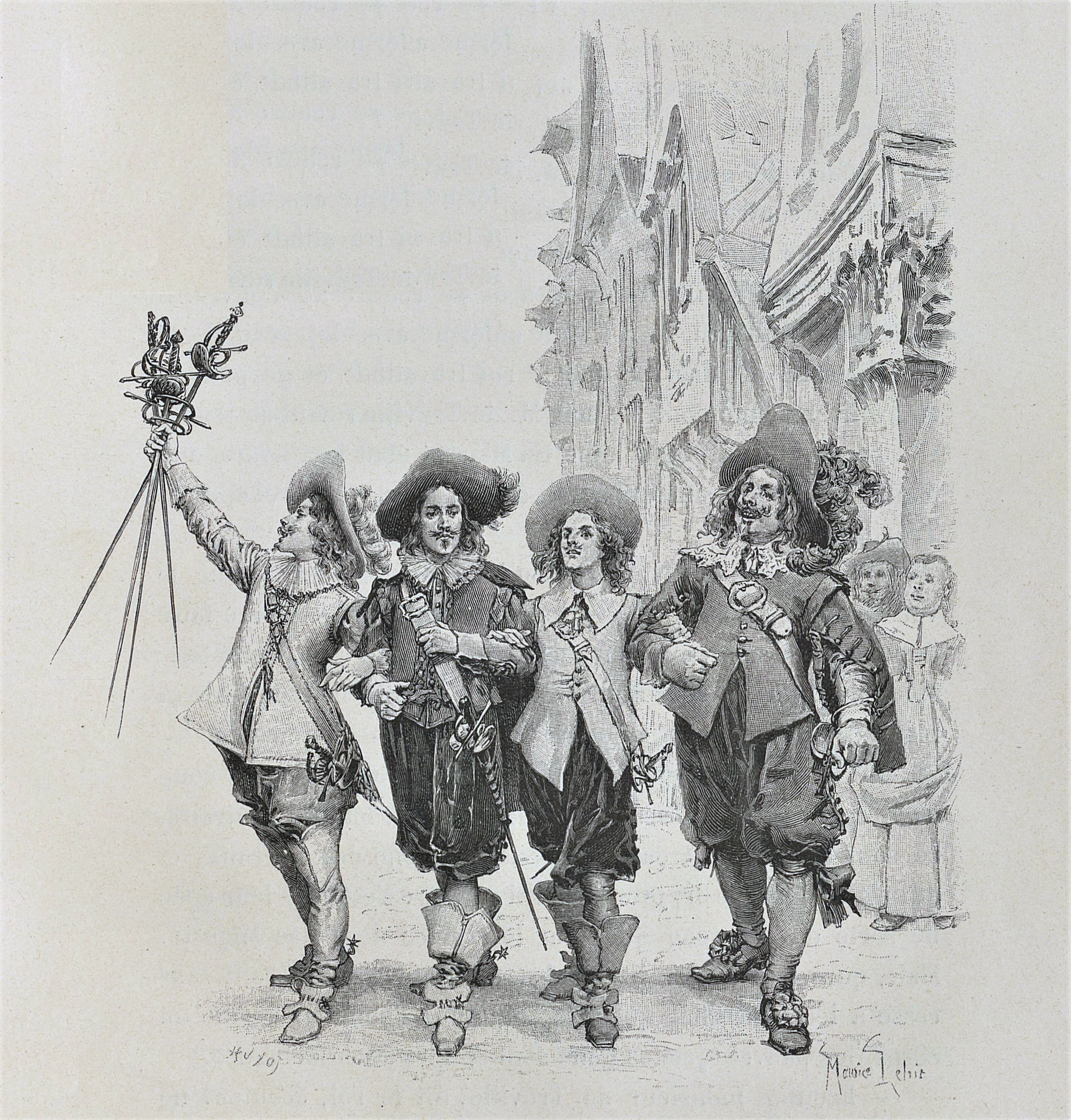
Published in chapters in 1844, The Three Musketeers is one the most famous novels of the Romantic Period.  Even people who know nothing about the book's story, characters, or background, know the famous line, “All for one, one for all!”

The Sequels: Twenty Years After, The Vicomte de Bragelonne, Louise de la Vallière, and The Man in the Iron Mask.

Published one year after The Three Musketeers, Twenty Years After takes place (spoiler) twenty years after the events of the first book.  The series is often considered a trilogy, because the last three books were published serially (1847-1850) as one volume, despite each part being a similar length to the original novel.

#2 Space Oddity by David Bowie

Released in 1969, Space Oddity is one of Bowie’s biggest hits, and the success of the single led to his second album being titled Space Oddity.  Simply put, it tells the story of an astronaut (Major Tom) who loses contact with ground control and control of his ship.


The Sequel: Major Tom (Coming Home) by Peter Schilling

Originally released only in German (1983), it was recorded and released in English about ten months later.  A quintessential ‘80s song, Major Tom (Coming Home) tells the story of (spoiler) Major Tom coming home. As an interesting side-note, both Space Oddity and Major Tom (Coming Home) were covered for Lincoln commercials.


#1 Adventures of Huckleberry Finn by Mark Twain

First published in 1884, Huckleberry Finn is considered by many (including myself) to be one of the greatest pieces of American literature.  The sequel to The Adventures of Tom Sawyer, Huckleberry Finn follows the fate of the titular character, a child from the pre-civil war deep south, as he flees from his abusive father with the help of Jim, a runaway slave.

The Sequels: Tom Sawyer Abroad; Tom Sawyer, Detective

Published in 1894 and 1896, respectively, Tom Sawyer Abroad and Tom Sawyer, Detective, were widely considered to be far inferior to the original two books.  The first takes place just after the conclusion of Huckleberry Finn, and features Huck, Tom, and Jim, sent to Africa in a bizarre hot-air balloon, where they have many confusing adventures.  Tom Sawyer, Detective has Huck Finn playing Watson to Sawyer’s Sherlock Holmes, as he narrates Tom Sawyer (spoiler) being a detective.


Saturday, February 18, 2012

Weird, Experimental Short Story

    In the cities, don’t go looking for stars in the night sky.  We’ve washed them off.  A few have managed to hold on, but they don’t bother anyone.  They hang around while the moon slides past and deposits itself in the horizon.  Then they fade as the sun takes over.

    Rotate.  Revolve.  Repeat.

    The sun also sets, igniting the sky behind it.  A flare, a beacon, a message that only the stars can read.  But we’ve taken the stars.  The orange orb sinks behind the waves and the purples and pinks turn to black, while the silver disc begins its nocturnal ascent.  The stars come out.  We took most of them.  We didn’t destroy them, or erase them.  We brought them to Earth.

    The moon conquers the treeline.  Polaris, Sirius, and Canopus report for duty.  Rigel’s there too, but you can’t see him.  They stay in their stations and watch, unblinking.  On earth, they see Procyon.  Stumbling out of a bar, taking a swing at the photographers.  They turn their attention to Capella A, dancing close with Regulus.  Capella B is at home, suspecting but unsure.  The moon passes its apex.  Pollux is over one-hundred stories tall.  Merak overdosed in the lobby.  The moon is swallowed by the end of the earth, and the sun is regurgitated from the opposite end.

    Rotate.  Revolve.  Repeat.

    Rigel didn’t report.   Polaris and Canopus expected as much.  Sirius had held out hope.  No one cranes their neck to look at the stars.  It used to just be in the cities.  But the world has become too bright.  Rigel picks up a microphone at a dive bar, a crowd there to listen.  The moon approaches the climax of its arc.  Canopus will be next.  There’s an inventor in Baltimore.  After that, it will be Sirius.  The moon falls.  Polaris will be last.  We’ve used Polaris for centuries, but that too must end.  The sun erupts from the east.

    Rotate.  Revolve.  Repeat.

Thursday, February 9, 2012

When Technology Surpasses Its Usefulness

One of the greatest philosophical questions of the digital age is as follows: At what point does technology surpass its usefulness?  I believe that the answer is: When the technology makes a task more difficult than the method it is replacing.  But I come here with more than an opinion on a philosophical question.  I have proof.   
BEHOLD!


It may look like an ordinary washing machine, but look closer.  Where do I insert change?


That’s right.  It doesn’t accept actual currency.  It also doesn’t accept credit cards.  It requires the user to go to a machine (not located in the same building as the laundry room) and exchange money for a prepaid card.  A prepaid card that is only good for the washing machines and dryers.  I didn’t have much choice so I went to the nearest machine.

I selected the “buy card” option (the card itself costs $2, which is more than it costs to wash and dry a load of laundry), and entered a $1 bill.  The digital readout said, “Bill Value: 1.00 – Bill not accepted.”  I tried multiple bills, but met no success.  Defeated, I went to a different building to a different machine.


Long story short, I had use my debit card, to buy a card so I could pay to do laundry.  The problem this could be argued to solve (money inside the washing machines needing to be collected/getting stolen) is solved by installing multiple new machines, at least one of which holds money. 

Well, that's the end of my rant.  I'm on my way to find whoever came up with this horrible idea and give him/her a taste of Occam's razor. 


Friday, February 3, 2012

Ghost, Writer

                        Stanley Reed propped his head up with his elbow and massaged his forehead with his knuckles.  “Think!” he commanded himself, the blank page on his monitor waiting to be filled.  “Think!” he tried again, clenching his eyes shut, hoping to find inspiration on the back of his eyelids.  A light bulb went on.  Literally.  Figuratively, he was still completely in the dark, but in reality, the light in the bathroom of his shitty studio apartment had turned on. 

            This wasn’t the first time that a crackhead had broken into his home, so when Stanley grabbed a hammer from underneath his writing desk and walked the four paces past the bedroom to the bathroom, knocked on the door, and shouted, “I know you’re in there!” he was startled to hear a voice reply in a calm fashion and Brooklyn accent, “Good.  I thought I was being too subtle.  Come in.”

            Despite his better judgment and the better judgment of most rational individuals, Stanley opened the door to the bathroom.  It was empty.  He spun around looking until he got dizzy and stopped.  The room didn’t get that memo and kept on spinning.  “I’m up here!” said the voice.  Sure enough, lying on the ceiling with his face to the floor, the man who had called floated with a big grin on his face.  “My name’s Roger.  Nice to meet you.”

            Stanley thought he would faint, but realized that he didn’t have the resolve to go through with it, instead opting to spout gibberish.  “But…how…I don’t…Wha…”

            “Get it all out of your system now,” Roger said, slowly rotating until his feet were aiming at the floor.  “If you don’t come to terms with it now, you’re going to wake up one day and have a real breakdown.  This one guy I knew, heh, he just ran out when he saw me.  Tried to pretend it didn’t happen.  A week later, he gets out of bed, decides he’s still dreaming, and jumps off the roof of his building.  He’s a nice guy, but not much in the brains department.” 

            “You…you’re a…you’re…” Stanley stammered.

            “I’m a… what?” Roger smirked.

            “Uh, a ghost.” Stanley managed to say.  It felt so good to say it.  There was no uncertainty about it now.  He was talking to a ghost.  Or he was completely insane, but he was pretty sure he was talking to a ghost.

            Roger descended to the floor, the soles of his translucent sneakers passing through the dull linoleum. “Damn straight,” he said. Questions darted through Stanley’s head like a swarm of bees, each taking a jab at his psyche.  Only one stuck.

            “Why?” he asked.

            Roger raised an eyebrow, “Why what?  Why am I a ghost?  Why I am I here?”  Stanley stared vacantly.  Roger rolled his eyes.  He could see through the top of his own skull when he did that, and even after eight years of being a ghost, he still thought that was pretty neat.

            “I guess the first one,” Stanley muttered.

            “Why am I a ghost?” Roger said.

            “Yeah, that one.”

            “I’m a ghost because I died.” Roger shrugged.  Stanley turned on his heel and made to leave the bathroom. “Wait!” Roger shouted.  He did.  “Sorry.  Ghost humor.  I was in college.  I wanted to be a published writer, then, well…” Stanley turned around.  He felt sorry for the specter in his bathroom.

            “Go on,” Stanley said gently.

            Roger sniffled, “There was a car accident.  No one’s fault, really.  Some guy’s tires blew out, and I swerved right into a statue of some founding father or other.  I think it was Samuel Johnson but I don’t know.”

            “What then?”

            “Then I died, genius.” Roger snapped.

            “Sorry.” Stanley whimpered.

            “Naw,” Roger said, “It’s okay.”  They stood in silence for a minute or two.  Roger shuffled his feet and said, “Do you want to know why I’m here?”

            “Yeah.” Stanley answered.

            “I’ve been watching you.  You got some good stories, but you just gotta get your foot in the door before you can get them published.”

            “Exactly!” Stanley shouted.  Finally, someone who got it.

            Roger nodded, “And that’s where I come in.  I’ve got some stories; ones that’ll get you the breakthrough you need.  I just want to see them published.”

            Stanley nodded emphatically, “Great!” he said, “Tell me all about it.”  So Roger did.

            It was good.  No, that’s not true.  It was fantastic.  It had intrigue, romance, action.  There were affairs and fistfights and even a few murders.  And two months after Roger told Stanley the story for the first time, the tale of the evil Mr. Norton Lindquist and his sordid life was number three on the New York Times Bestseller’s list, and Stanley Reed was famous.

            And that is how he ended up in a Barnes & Noble’s in Raleigh, getting ready to read excerpts and sign books for his adoring fans.  He was in the bookstore’s bathroom, straightening his tie in the mirror.  Roger hovered by his side.  “Give ‘em hell,” he said, beaming with pride.

            Stanley smiled, picked a piece of spinach out of his teeth, and smiled again.  “Will do, buddy.”  He gave himself one last look-over.  “You ready,” he asked.  Roger became invisible.       
 “As I’ll ever be,” said his voice from somewhere in the room. 

            Stanley walked out of the bathroom, past the humor section, the biographies, and the coffee table books, to where a few dozen folding chairs sat, occupied by an excited and impatient crowd.  The chairs were all directed towards a table with fifty copies of his book on it.  One copy had a light blue post-it sticking out at page 182.  Stanley opened the book to that page, and read aloud:

“I am a gentleman of refined taste,” said Norton, “Do you see the paintings I allow to grace my presence?  Matisse.  Renoir.  Picasso.  Cezanne.  I surround myself with greatness, Ms. Gray, because anything else would be an insult.  I would not suffer the works of a master to be defiled in the home of a lesser man, nor should I have my greatness befouled by anything below me.  It is indecent, if not immoral, to lower myself by association with something so far beneath me.  Like you, Ms. Gray.

“While I do allow things of lesser worth into my home, it is only temporary.  Like toilet paper, or light bulbs.  They serve their purpose and are disposed of.  So you may pack your bags, Ms. Gray.  And leave my sight.”


            Stanley closed the book with a dramatic flourish.  The crowd applauded.  Except for one man in the back, who simply raised his hand.  Stanley pointed at him, “Questions?”

            The man stood up.  A gaunt man, elegantly dressed in a shockingly expensive suit.  He had silver hair slicked back. He had a British accent. “Yes.” He said.  “Where did you get the inspiration for this story?”
 
            Stanly smirked.  “Sometimes things just come to you.”

            The man grimaced.  “Bull shit.” 

            Some of the more prudish of the guests gasped, some chuckled, but all were uncomfortable.

            The man smiled in hatred, reached into his shirt, and pulled out a revolver.  “Do you know how I know you’re lying?” he asked, leveling the weapon at Stanley’s head. 

            Stanley gulped.  “N…Nuh…N…No.” He whimpered.

            The man cocked the revolver. “Because I’m Norton Lindquist!” He screamed, and fired. 

            People fled the bookstore en masse.  All except for Roger and Stanley. Stanley hovered over to Roger.  “What the fuck!” Stanley screamed.  “Why!  Why did you give me a true story!”

            Roger stared at his shoes, “Well,” he said, “I was a journalism major.”
Sunday, January 15, 2012

Garfield: The Morbidly Obese Cat

As anyone who has ever seen a morbidly obese cat knows, it's very depressing.  Much more so than the comic strip Garfield would imply.  So, every now and then, I'll edit Garfield comics to reflect that.


Jon Arbuckle should not be allowed to own pets.

Wednesday, January 4, 2012

The Disastrous Adventures of Carl - Chapter 1

            Thirty thousand feet above Oregon, the U.S.S. Pinto entered into a nose-dive.  While the greatest in 47th century technology made the airship virtually invincible to enemy fire, it couldn’t do anything to stop gross incompetence from within the Pinto itself.  Gross incompetence named Carl. 
            This particular bit of unspeakably catastrophic foolishness was particularly catastrophic, unspeakable, and foolish because it ended up causing the United States of North America and Associated Islands to lose World War LXXIV.  It is worth noting that mankind had solved all its problems, including war, somewhere in the mid-39th century.  With nothing much else to do, they started holding a world war every ten years.  It’s all fun and games though, as only the robots fight.  The first to hold control of Australia (which had been uninhabited since The Great Kangaroo Uprising of 2944) for two weeks wins.  And the USNA&AI was just one strategic deployment away from winning the whole thing.  Then Carl happened.
            Robotic Cannons are pretty low tech.  Basically, they’re just standard plasma cannons on wheels.  The lack of any AI software makes them difficult for opposing forces to notice, making them a valuable tool for surprise attacks.  There were twenty such cannons on the U.S.S. Pinto, and someone made the mistake of asking Carl to run a quick diagnostic scan on all of them.  He succeeded in scanning four cannons before dooming the Pinto to crash by not only activating a cannon, but setting it to “Berserk” mode, which was particularly impressive because robotic cannons don’t have a berserk mode.  The cannon raced out of the transport dock and into the body of the ship, firing indiscriminately.  Carl chased after it, hoping to catch it before anyone noticed the gaping holes in the side of the ship. 
            Sirens began to blare as the captain announced over the PA system, “Code Indigo.  Critical weaponry malfunction.  I repeat Code Indigo.  This is not a drill.”
            Carl chased after the cannon.  “I’m on it!” he shouted to the people ducking and lunging for safety, “Tell the captain I’m on it!”  Someone did tell the captain, who immediately made another announcement on the PA system.  “Code Kind of Blue but Really More of a Green.  Please evacuate the ship immediately. I repeat, Code Kind of Blue but Really More of a Green.”  The crew rushed to the escape pods as the cannon careened aftward down the corridors with Carl hot on its trail.  Only one other person hadn’t fled yet.
            A few hundred yards further down the ship, Professor Larry Romulus the Incomprehensible was trying to save as much of his research as possible.  His research was so complex that he was literally the only person on Earth that could understand it, hence his title.  He managed to shove several hard drives into a bag before grabbing the only working prototype and dashing into the corridor.  He was just feet from the starboard escape pod bay when the cannon skidded around a corner and fired a massive ball of glowing blue-white plasma at the professor.  He dodged at the last second, mercifully avoiding the deadly glob of energy only to be particularly unmercifully impaled by a large shred of shrapnel from what used to be the escape pod.  
            In a stroke of luck, the ship tilted starboard and the cannon rolled out of the hole it just made and plummeted into the middle of a Renaissance Faire.  This was not so lucky for Hagar the Blacksmith, but was incredibly lucky for Carl.  Professor Romulus was dying anyway, so we’ll call it a wash. 
            With all the escape pods gone or destroyed, the ship tried to stabilize itself.  At its current rate, it would crash into the Pacific Ocean in two minutes and six seconds.  Carl approached the professor.  “Are you okay?” he asked.
            The professor coughed shallowly.  Then, in raspy rushed breath, he said, “What kind of stupid question is that?  I have a giant piece of metal sticking out of my chest.”  He coughed some more.  “Before I die, I need you to do something for me.”
            “What do you need me to do?”
            The professor handed him the prototype.  It was a sleek gray cube, about six inches on each side.  There was a green button on one side and a screen on the front, but it was cracked.  “Take this.  Use it to escape.  Keep it safe.”
            “How?  What is it?”
            “It’s a transdimensional shift facilitator. “
            “I don’t know what that is.”
            “No one does.”
            “What does it do?”
            “You wouldn’t understand.”
            “Probably.”
            “Just press the green button and get out of here.”
            “Okay.  I’m sorry about all this, professor.”
            “Just get out of here!” The professor shouted.
            Carl pressed the green button and disappeared in a flash, leaving behind only a whiff of green smoke.

A new series!

In addition to A Series of Increasingly Improbable Events, I'm going to start another, simpler (but weirder) project.  It's called The Disastrous Adventures of Carl.  All I can tell you is that Carl is a space/time traveler, that each chapter will be 500-1000 words, and that the plot of each chapter will be decided by The Brainstormer.  So, lets see what the first chapter will be about:

Obtaining/Robotic/Cannon it is!