Showing posts with label book. Show all posts

Friday, December 28, 2012

Book Review: Lunar Park by Bret Easton Ellis


            Lunar Park is, to use an overplayed term, deceptively complex.  At once an autobiography, a ghost story, and therapy, Ellis tells the story of an edgy writer named Bret Easton Ellis who was catapulted to fame at a young age with the publication of Less Than Zero, only to come crashing back to Earth in middle age.   Bret (the character; I’ll refer to the author as Ellis) gets married to the movie star mother of his 11 year old illegitimate child and a six year daughter and moves to the suburbs to try to escape his past.  But his past comes back to haunt him, quite literally.   

            Ellis maintains the sleek writing style of his previous novels, but the tone is very different.  In his first three novels (Less than Zero, The Rules of Attraction, and American Psycho (I have not read Glamorama, and so will not comment on it)), the lifestyles of the privileged youth are depicted as shallow and ultimately meaningless.  While certainly depressing, the characters are in no hurry to leave that lifestyle behind, leaving the reader with the sense of the directionlessness and ennui the protagonists experience.  But Bret finds meaning and stability.  This book is about his (Ellis and Bret’s) coming to terms with maturity and responsibility and acceptance of the past.

            A particularly emotional theme running through the book is Bret’s unresolved issues with his father, and how those issues manifest themselves in his relationship with his son.  If Less Than Zero gave us a glimpse into Ellis’s world, Lunar Park gives us a glimpse into his psyche.  Over the course of the book, we see Bret grow emotionally in a way that we don’t see with any of his earlier protagonists. 

            As far as the horror goes, it was not as solid as the other genres wound into the book.  While genuinely scary at points, the horror scenes were on many occasions too bizarre to be taken seriously.  Likewise, Ellis draws out the process of reaching conclusions the reader makes pretty quickly, which throws the pacing off. 

            Overall, I’d recommend Lunar Park, especially to Ellis fans.  Lunar Park draws from previous works, both explicitly and subtly (at one point, Bret has a meeting at one Dorseah Diner) and offers a peek at the man behind the book.

     Favorite Quote: When you give up life for fiction you become a character.

Wednesday, October 17, 2012

The Box: Uncanny Stories by Richard Matheson (book review)


            The Box: Uncanny Stories (originally titled Button, Button: Uncanny Stories) was released in 2008 and contains stories published between 1950 and 1970.  The name was changed to capitalize off the (then upcoming) film adaptation of the previously titular story, Button, Button. 

See The Box on Goodreads


            Button, Button is a good place to start when discussing Matheson’s short stories.  Most of his stories have a compelling “what if?” scenario behind them and end with a sort of poetic justice twist.  While reading this collection, I immediately made comparisons to The Twilight Zone.  A quick bit of research on Matheson turned up that he was a writer for The Twilight Zone.   Another comparison I’d like to mention is how some of his stories are reminiscent of the old radio program Suspense.  The stories Dying Room Only, No Such Thing as a Vampire, and Clothes Make the Man are very suited for a radio adaptation. 

            What follows is a brief (spoiler free) review of each of the twelve stories in the collection.

            Button, Button (originally published in 1970): A stranger offers a married couple $50,000 if they press a button.  However, pressing the button will kill someone they don’t know.  The real effect of this story is in the ending, which you can find for yourself.

            Girl of My Dreams (originally published in 1963): The story follows a woman who dreams future tragedies and her exploitative boyfriend.  Together, they sell the information the woman receives in her dreams to those that would be affected.  Like Button, Button, there is a definite Twilight Zone poetic justice air to this story.

            Dying Room Only (originally published in 1953):  A married couple stops at a diner in the middle of the desert, and the husband disappears.  This is more of a mystery/suspense story than a sci-fi/horror story.

            A Flourish of Strumpets (originally published in 1956): What if prostitution became a door-to-door business?  That’s the premise of this story, which leans toward the humorous.

            No Such Thing as a Vampire (originally published in 1959): A Romanian doctor’s wife starts to succumb to symptoms of vampiric assault.  The story’s prose is very melodramatic, the first sentence describing the how doctor’s wife “awoke one morning to a sense of utmost torpor.”

            Pattern for Survival (originally published in 1955): A very short story about the dreams of a writer.

            Mute (originally published in 1962): At nearly 50 pages, this is the longest story in the collection.  It follows the story of a child named Paal, who is adopted by the town’s sheriff and his wife after the boy’s parents die in a fire.  Paal cannot speak, but has some telepathic ability.

            The Creeping Terror (originally published in 1959):  Despite having the most cliché title of any story in the collection it is the most original.  It’s written as a college paper (with brief interludes of third person omniscient narration) about a historical event known as the L.A. Movement.  Not only is Los Angeles alive, but it’s spreading.  This is a humorous story, which pokes a bit of fun at Los Angeles (as an Angelino, I’m all for this).

            Shock Wave (originally published in 1963): A church organist is convinced that the organ has gained sentience.

            Clothes Make the Man (originally published in 1950): There is a man who cannot think without a hat, walk without shoes, use his hands without gloves, etc.

            The Jazz Machine (originally published in 1962):  This is the only story where the prose is worth mentioning.  Written in non-rhyming verse, The Jazz Machine is the first person narrative of a jazz musician who is approached by a man who claims that he has a machine that can translate jazz into the sentiments it is meant to express.  While I’m not a fan of beat poetry, this story is very well written.

            ‘Tis the Season to be Jelly (originally published in 1963): A slice-of-life story about mutants living in a (presumably) post-apocalyptic world.  This is probably the strangest story of the lot.

Sunday, September 9, 2012

The Literary Conspiracy


            I take my job as an amateur internet writer very seriously, which means I’ll take any interview that will score me a lot of hits.  Even, as was the case yesterday, if most of those hits are self-inflicted kicks to the skull.  I was loitering in the halls of an upscale hotel near LAX, minding my own business, when I noticed a line of people in suits carrying notepads and tape recorders was forming outside one of the suites.  With nothing better to do, I got in line. 

            I was the last person in line, and after about forty-five  minutes I found out that this was a press junket for Stephenie Meyer, talking about life after Twilight.  If my years on the internet hadn’t taught me how to control my gag reflex, this article would have had a very different ending.  I sat down in a plush leather armchair across from Meyer, the spacious suite suspiciously lacking any bodyguards, personal assistants, or anyone else for that matter.  Something seemed off.

            “So,” I said, after an awkward silence, “What’s next for an author of your stature?”

            “I’d like to do some high-concept avant-garde work.”

            “I see.”  I made a mental note to make sure ‘stature’ means what I think it does.  I was about to say something else, but then I noticed that Meyer’s head was twitching violently back and forth.  “Are you okay?” 

            A few things tipped me off that she was not okay.  The first is that she started repeating the same word over and over again.  The second is that that word was ‘Error.’  By the time sparks started flying out of her ears, I was pretty sure something was amiss.  When the sparks had stopped for long enough that I was confident she wouldn’t catch fire or explode or spawn Meyer-nano-bots, I opened the suitcase sitting next to her seat.  (It’s perfectly legal to look through someone’s stuff if you’re there when they died; it says so in the sixth amendment.)   What I found was evidence of a conspiracy so complex and far-reaching that it is almost too stupid to believe. 

            The suitcase contained all the information on ‘Literary Contingency Plan Theta.’  Which, the cover sheet informed me, was designed to ‘inspire book sales in the otherwise illiterate in a manner that will anger the more literary among the populace, prompting them to buy quality books.’  It appeared that a number of authors all wrote their own version of Twilight, and those versions were then compiled and distilled into a garbled mess, i.e., a bestseller.  I was able to retrieve brief excerpts of the various versions of the story before the Meyer-bot self-destructed.  This conspiracy goes back longer than I would have dared to imagine, and could completely rewrite literary history.  The authors mentioned hereafter will, undoubtedly, deny any involvement.

Cormac McCarthy:

            See the girl.  She sat in the back of an old car.  Thunderheads galloped through the sky above, below the fog-muted greens of the treetops rattled in the cold seawind from the west, carrying the salt laden air inland. An alien world unlike the interminable expanse of orange and gold that was Arizona.  The girl stirs.  When will we get there?  she asks.  There is a man driving, he does not turn to her when he speaks.  Another hour, or so.

            That long?

            It’s the weather.

            The hill crests before them, at the peak they can see the town under siege from the rain that has sprung up out of nowhere.

Michael Cricthon:

            “So the enzyme in your saliva is responsible,” Bella asked.

            “Exactly,” Dr. Cullen explained.  “Once in the bloodstream, the enzyme enters the DNA of the individual cells, much in the same fashion of the naturally occurring thyroid hormone, tri-iodothyronine.  The enzyme rewrites the DNA to, first of all, produce more of the enzyme.  Then it prevents the shortening of telomeres, which halts the aging process.  However, it inhibits erythropoiesis, the production or erythrocytes, better known as red blood cells.”

            “But what about your super strength?”

            “If we look at the muscle fibers we –

Thomas Pynchon:

            He held her, pressed up against an eldernly oak.  She turned her head, could see an eroded etching in the bark, made out that it said ‘Ron + Jenny Always.’  They had put that there in 1952.  Ronald Hopefalls was a sailor aboard the aircraft carrier U.S.S. Mishap, which had anchored safely in Seattle after six months off the coast of Thailand.  Ronald had bartered for a ride south from Seattle, he traded a sterling silver pendant that he had stolen from a drunk in Bangkok.  The pendant appeared to be a meaningless series of criss-crossing metal mesh, but when a light shone through it, it cast shadows depicting various methods of fellatio depending on the angle and intensity of the light.

Bret Easton Ellis:

            I am wearing an Abercrombie and Fitch black polyester-blend tee-shirt, Hot Topic tattered denim blue jeans and black and gray Converse sneakers with white laces.   I’m trying to get to English class when I see Mike coming towards me.  I don’t want to deal with him.

            “You look really nice today,” he says.

            Please go away.

            “Thanks.”

            He shuffles his feet like a moron and I know what he’s going to ask.  It’s embarrassing to watch.

            “Do you want to go to prom with me?”

            I’d rather slit open my abdomen and eat whatever comes out.

            “I’m not going.”

            He looks broken and walks away.  I should suggest a girl for him to take out, just so I won’t have to deal with how pitiful he looks.  Half the guys here have asked me out, like they think that just because I’m the new girl, I’ll drop my panties for the first nice guy that comes along.  Why not?  There’s nothing else to do in this shitstain of a town.

Ernest Hemingway:

            They thought the man had been torn apart by wild dogs.  The carcass was ragged with teethmarks.  I listened to my father relate the investigation.  They found a second body.  Now they think a man did this.  He is going to search the woods for the killer.  He told me he loves me and left.  I poured myself a drink.

Geoffrey Chaucer:

And eek sporte hadde he,

But condiciouns ther neede be.

The shoures soote  loved hem alle,

For thanne koulde folks playen balle.


Saturday, September 1, 2012

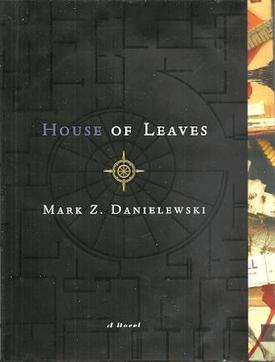
Book Review: House of Leaves


            Mark Z. Danielewski’s House of Leaves is proof that there are still unexplored avenues in horror and experimental literature.  Danielewski takes the old mantra of “show, don’t tell” to its extreme, sculpting the layout of the pages to show the characters’ mental states and even, occasionally, their physical location.  Alternating between agoraphobic (a single paragraph at the bottom of a page) and labyrinthine (footnotes running through the text in multiple directions), House of Leaves is an exercise in form as an integral part of story-telling. 

            It was no coincidence that I used the term labyrinthine in the previous paragraph.  Both the story and the form it takes are like a labyrinth (an analogy the author (but not the narrator) of the novel within the novel also makes); getting lost in the branching corridors of the lives of Will Navidson, Zampanó, and Johnny Truant is easy, but you will be greatly rewarded if you can find the right path. 

            If you have not read House of Leaves, you’re probably wondering what the heck I’m talking about with novels within novels and sideways footnotes.  There are three main stories in House of Leaves.  That of Johnny Truant, who found a manuscript among the belongings of the deceased blind man known only as Zampanó, the story within the novel itself, and the story of Zampanó.  The bulk of House of Leaves is comprised of Zampanó’s novel, The Navidson Record, which is written to look like a non-fiction exegesis on a fictional documentary of the same name.  It follows the story of an acclaimed photojournalist, Will Navidson, his children, and their mother, as they move into a house in Virginia and try to settle down (Navidson was never around, always documenting wars or disasters).  Navidson got grant money to make a documentary about putting down roots and becoming close as a family.  Things take a turn for the strange as they discover that the house is slightly larger on the inside than on the outside.  Then things become downright spooky as rooms start appearing including mile-long hallways and below-freezing chambers. 


In some editions, the dust-jacket is smaller than the book.


            Because The Navidson Record has taken the form of a scholarly pursuit, footnotes abound.  While not a typical manner of comedic relief (although House of Leaves is anything but typical), the criticism of film (and perhaps literary) criticism is clever, albeit a bit repetitive.  Consider the idea that scholars wrote hundreds, or even thousands, of books and articles were about the physics, symbolism, and nature of the House on Ash Tree Lane, but were either unable or unwilling to go to the house itself.  (If it seems like I’m reaching, Karen, the love of Will Navidson’s life, gets opinions on a clip from the documentary from a number of real-life authors, filmmakers, architects, critics, etc., including Derrida, the father of deconstructionism.  While all the people asked provide different answers, only Derrida is portrayed as spouting incomprehensible nonsense.)

            Among the footnotes Johnny Truant will occasionally interrupt, his life having descended, slowly, gradually, into madness.  His history and his present are mirrored and affected by The Navidson Record and those acquainted with the enigmatic Zampanó. 

            Zampanó doesn’t have his own story, so much as he informs the other stories.  We learn about him through his acquaintances, through the information Johnny digs up, and through what he puts in his novel, or more importantly, what he tries to leaves out.   Sections of crossed out material (including the previously mentioned labyrinth analogy) that Johnny included in his transcription of the novel tell us about its author.  In this way, the book examines the relationship between the author and his work. 

            The way all the storylines interact with each other can be confusing, but creates something greater than the sum of its parts.  It’s not an easy read, but House of Leaves is worth the effort.


Sunday, August 26, 2012

Breif Book Review: Dune

Frank Herbert’s Dune can be read two ways.  The first is as a story:

            With a few twists, the story behind Dune is an old one.  A noble family travels to another fief, only to fall victim to treachery resulting in the death of the father and forced exile of the son; the son must get his revenge and reclaim the throne.  Make the fief a planet named Arrakis, and add in prophecy, mystic abilities, and futuristic tech, and you’ve got the story of Paul Atreides.

The second (and I believe better) way to read this novel is as a portrait:

            Like I said, the story throughout Dune is an old one, one that will not surprise the reader too much.  But the point isn’t the plot, it’s the planet.  What Herbert attempts and (I believe) succeeds in doing, is giving us enough of an understanding of an entire world and population to be able to extrapolate and comprehend their present, past, and future.  He covers topics ranging from ecology, to theology, to military strategy, to Xenobiology.  The scope (and, I presume, intent) of this novel gives the readers more than just a window into another world: It gives them a guided tour.

            In creating a world, some things get more attention than others.  The simplicity of the characters is my biggest complaint (followed closely by the hundreds of times I had to skim through the glossary).  But the people are not the point.  They, like their culture and environs, exist to bring Arrakis to life.  Perhaps there’s something to be learned from the amount of work and detail put into bringing to life a nearly lifeless planet.

            At almost 800 pages (not including the appendices which cover ecology, history of noble families, the intent of a sacred order, and a glossary), Dune may require a bit of work.  Picking up on the lexicon of Arrakis may take some time at first, but is rewarding as you go along.  Dune also asks the reader to accept the mysticism as well as the superscience.  I am, admittedly, not a big fan of the fantasy genre, with many exceptions.  So take it with a grain of salt when I say that the mystic abilities are somewhat confusing in their limitations and uses.

            But at its heart, Dune isn’t any more about magic than it is about any one aspect of the Arrakeen society.  This novel is a portrait of an entire planet.  And it paints that portrait spectacularly.
            

Sunday, February 19, 2012

4 Things You Didn't Know Had Sequels

#4 Lola by The Kinks

This is arguably the Kinks’ most famous song.  It’s a first person story about a nervous protagonist with no experience with women who, at a “club down in North SoHo” is picked up by the eponymous Lola, who is a transvestite.  Ray Davies, who wrote the song (released in 1970), says that it was based on an actual encounter between the band manager and a transvestite.


The Sequel: Destroyer by The Kinks

Released in 1981, Destroyer picks up where Lola left off, as the protagonist is wracked with paranoia upon bringing Lola back to his place.


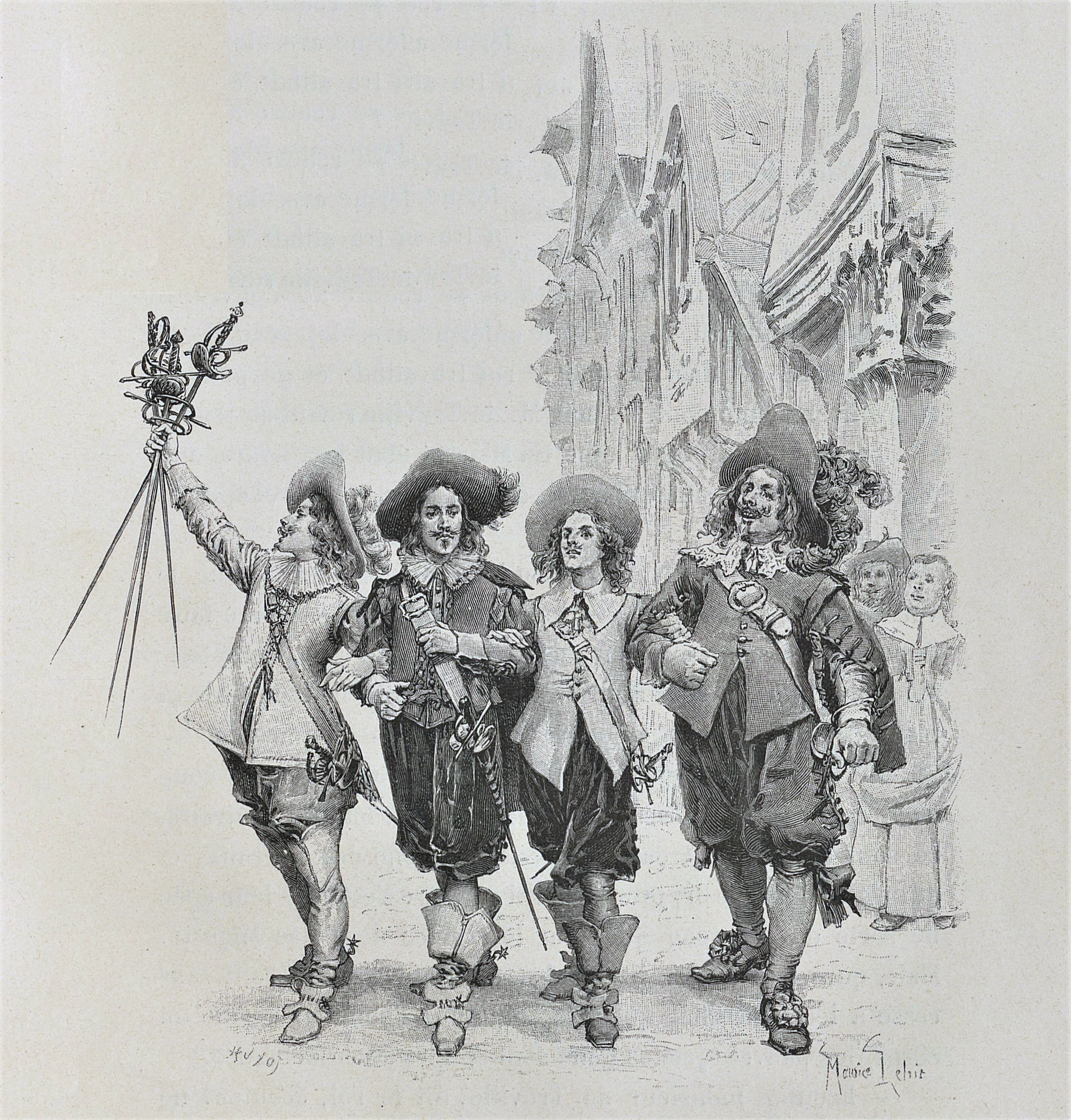
#3 The Three Musketeers by Alexandre Dumas


Published in chapters in 1844, The Three Musketeers is one the most famous novels of the Romantic Period.  Even people who know nothing about the book's story, characters, or background, know the famous line, “All for one, one for all!”

The Sequels: Twenty Years After, The Vicomte de Bragelonne, Louise de la Vallière, and The Man in the Iron Mask.

Published one year after The Three Musketeers, Twenty Years After takes place (spoiler) twenty years after the events of the first book.  The series is often considered a trilogy, because the last three books were published serially (1847-1850) as one volume, despite each part being a similar length to the original novel.

#2 Space Oddity by David Bowie

Released in 1969, Space Oddity is one of Bowie’s biggest hits, and the success of the single led to his second album being titled Space Oddity.  Simply put, it tells the story of an astronaut (Major Tom) who loses contact with ground control and control of his ship.


The Sequel: Major Tom (Coming Home) by Peter Schilling

Originally released only in German (1983), it was recorded and released in English about ten months later.  A quintessential ‘80s song, Major Tom (Coming Home) tells the story of (spoiler) Major Tom coming home. As an interesting side-note, both Space Oddity and Major Tom (Coming Home) were covered for Lincoln commercials.


#1 Adventures of Huckleberry Finn by Mark Twain

First published in 1884, Huckleberry Finn is considered by many (including myself) to be one of the greatest pieces of American literature.  The sequel to The Adventures of Tom Sawyer, Huckleberry Finn follows the fate of the titular character, a child from the pre-civil war deep south, as he flees from his abusive father with the help of Jim, a runaway slave.

The Sequels: Tom Sawyer Abroad; Tom Sawyer, Detective

Published in 1894 and 1896, respectively, Tom Sawyer Abroad and Tom Sawyer, Detective, were widely considered to be far inferior to the original two books.  The first takes place just after the conclusion of Huckleberry Finn, and features Huck, Tom, and Jim, sent to Africa in a bizarre hot-air balloon, where they have many confusing adventures.  Tom Sawyer, Detective has Huck Finn playing Watson to Sawyer’s Sherlock Holmes, as he narrates Tom Sawyer (spoiler) being a detective.